
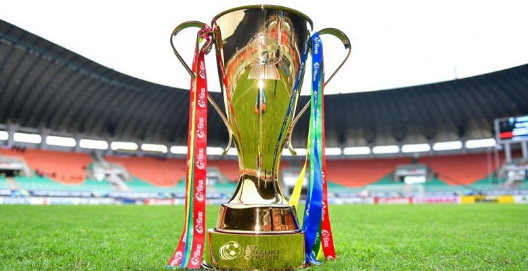
AFC Asian Cup – The Most Prestigious Asian Football Tournament
 The AFC Asian Cup is a continental football tournament organized by the Asian Football Confederation (AFC), first held in 1956.
With over six decades of history, the Asian Cup has become a launching pad for many talents and affirmed the status of football powerhouses. Let’s explore…Learn more about this tournament through the article below sam86.
The history of the formation and development of the AFC Asian Cup
The AFC Asian Cup has come a long way from a small regional tournament to a global event, marking the maturation of Asian football. Since the 1950s, when football on the continent was still in its infancy, it has played a pioneering role in promoting healthy competition and raising the quality of play nạp tiền sam86.
The early editions of the AFC Asian Cup
The first Asian Cup took place in Hong Kong in 1956 with four participating teams: Hong Kong, Israel, South Korea, and Japan. The tournament was experimental, helping to lay the foundation for Asian football after World War II. South Korea won the championship, defeating Israel 2-1 in the final.
In 1960, South Korea hosted the tournament and successfully defended its title against Taiwan. The early editions had few participating teams and faced many limitations in terms of facilities. Nevertheless, the tournament ignited a passion for football across the continent.
In 1964, the AFC Asian Cup was held in Israel, witnessing Iran’s first championship title. This was a significant milestone, marking the rise of West Asian football. Over the first four editions, only eight teams participated, but the tournament created unforgettable historical moments.
The format changes and expansion of the AFC Asian Cup.
From the 1970s onwards, the Asian Cup underwent significant changes in its format. The 1972 tournament in Thailand introduced a group stage combined with a knockout system, making it fairer and more exciting. By 1984, the number of teams had increased to ten, and Saudi Arabia won the tournament for the first time in Singapore.
The next turning point came in 2007 when the tournament was first co-hosted by four Southeast Asian nations. In 2019, the Asian Cup expanded to 24 teams and continued this expansion in the 2023 edition in Qatar. These improvements elevated the tournament, created opportunities for smaller teams, and fostered the sustainable development of Asian football.
Outstanding achievements and future prospects
The AFC Asian Cup is not just a competition, but also a testament to heroic stories and continuous innovation. With 18 editions already held, the tournament has produced countless records and promises many surprises in the near future.
Top winning teams in the AFC Asian Cup
Japan is the most successful team with four Asian Cup titles (1992, 2000, 2004, 2011), solidifying their status as the “Blue Samurai” with their technical skill and composure. Iran and Saudi Arabia follow with three titles each, with Iran notable for its golden era from 1968–1976, and Saudi Arabia dominating the 1980s–1990s.
In the most recent tournament in 2023, Qatar successfully defended their title by defeating Jordan 3-1 in the final. Australia joined the group. AFC Asian Cup Since 2006, they quickly rose to prominence in 2015, asserting the strength of Oceania. These champion teams not only won titles but also inspired the younger generation, contributing to shaping the football map of Asia.
The 2027 AFC Asian Cup and expectations.
The 2027 Asian Cup will take place in Saudi Arabia from January 7th to February 5th, featuring 24 teams. This is the country’s second time hosting the tournament after 1988, demonstrating significant investment in infrastructure and modern stadiums. The six-group format promises a dramatic knockout stage with top contenders such as Japan, Iran, and South Korea.
 Tournament AFC Asian Cup predictions The year 2027 also emphasizes sustainability, with green initiatives and advanced VAR technology. Fans are anticipating the rise of young teams like Vietnam or Uzbekistan, who could spring big surprises. This will also be an opportunity for many new stars to prove themselves ahead of the 2026 World Cup.
More than just a top-level competition, the 2027 Asian Cup is seen as a continental football festival. With its extensive television and digital coverage, the tournament will reach fans worldwide. From there, the Asian Cup will continue to affirm its position as the heart of Asian football. Participate and receive…Let’s have fun with this exciting tournament!
Conclude
In summary, the AFC Asian Cup has evolved from humble beginnings into a major continental football event. The tournament not only celebrates champions but also promotes holistic development and team spirit. As Asian football increasingly reaches global prominence, the Asian Cup continues to be an endless source of inspiration for fans.